
Last updated November 16, 2026
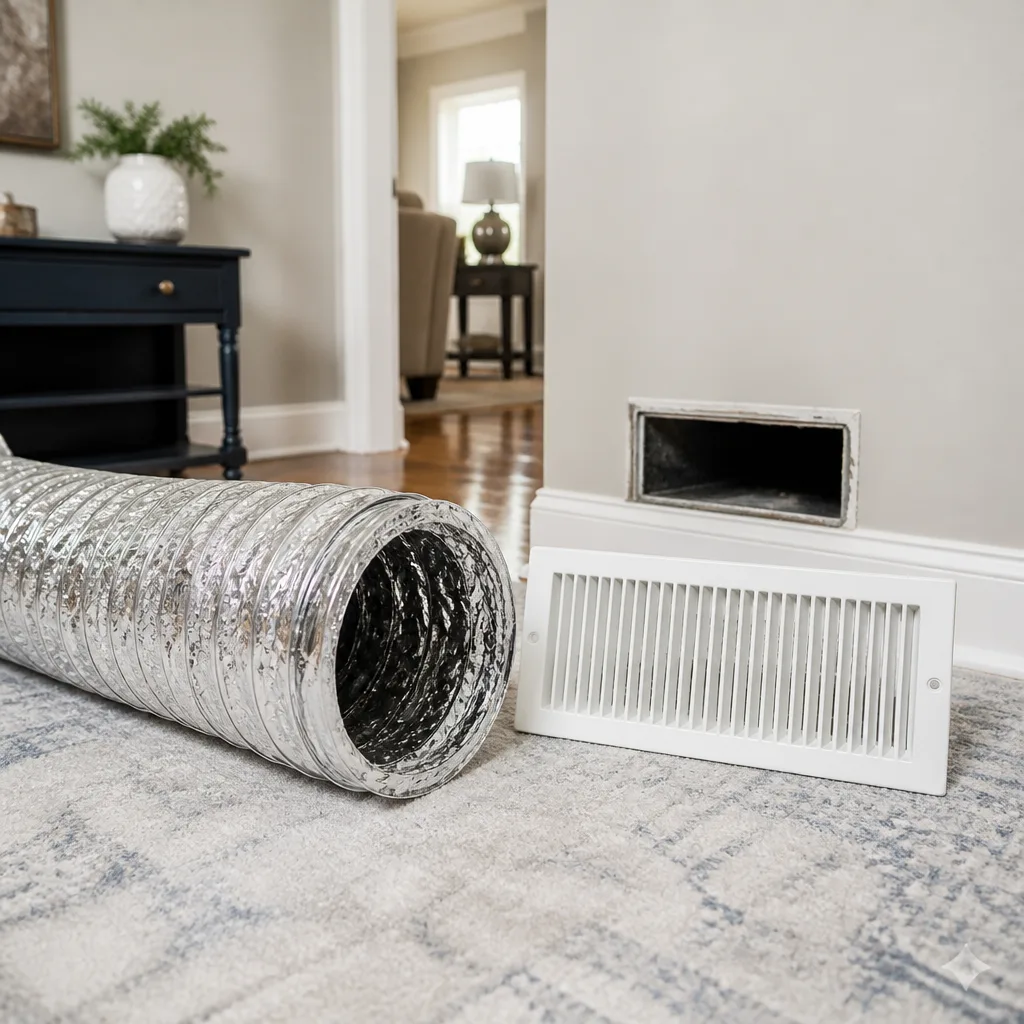 Whole-home duct cleaning
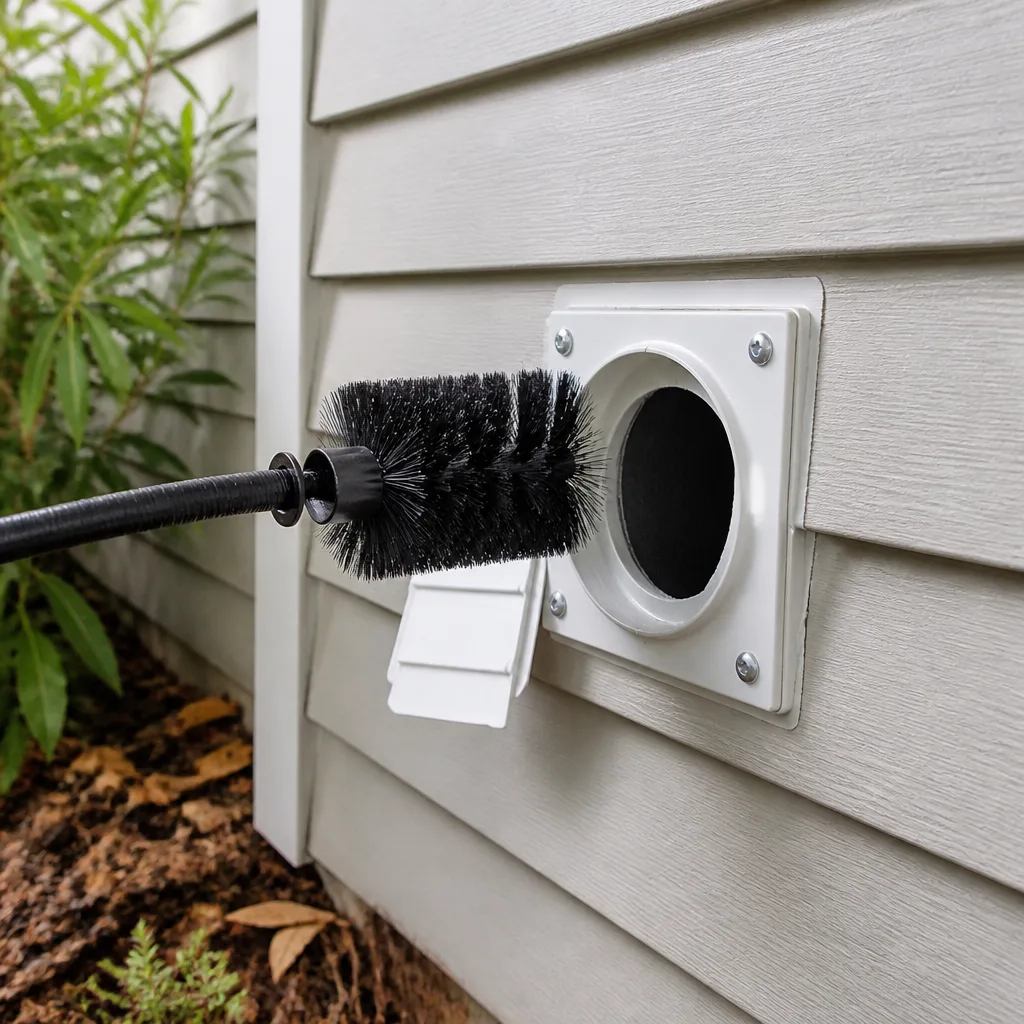 Dryer vent cleaning
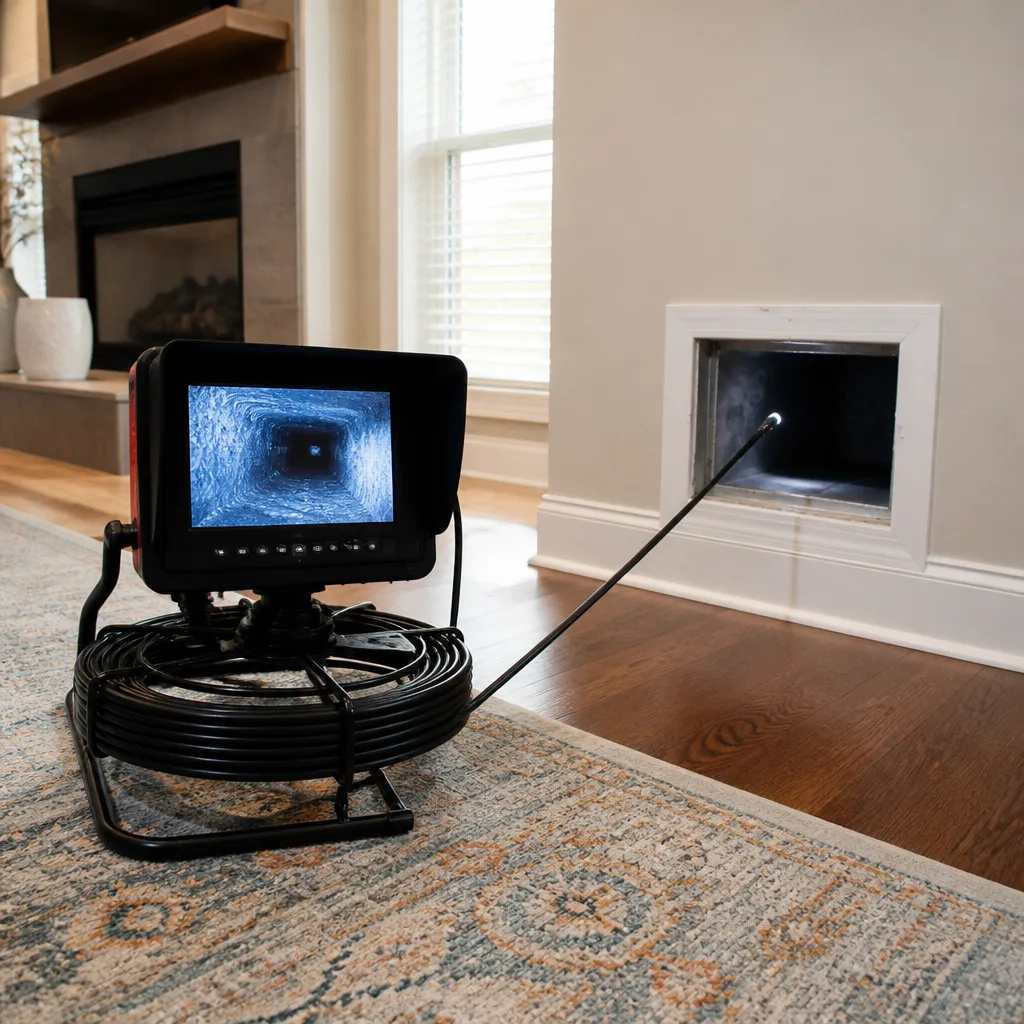 Camera inspection
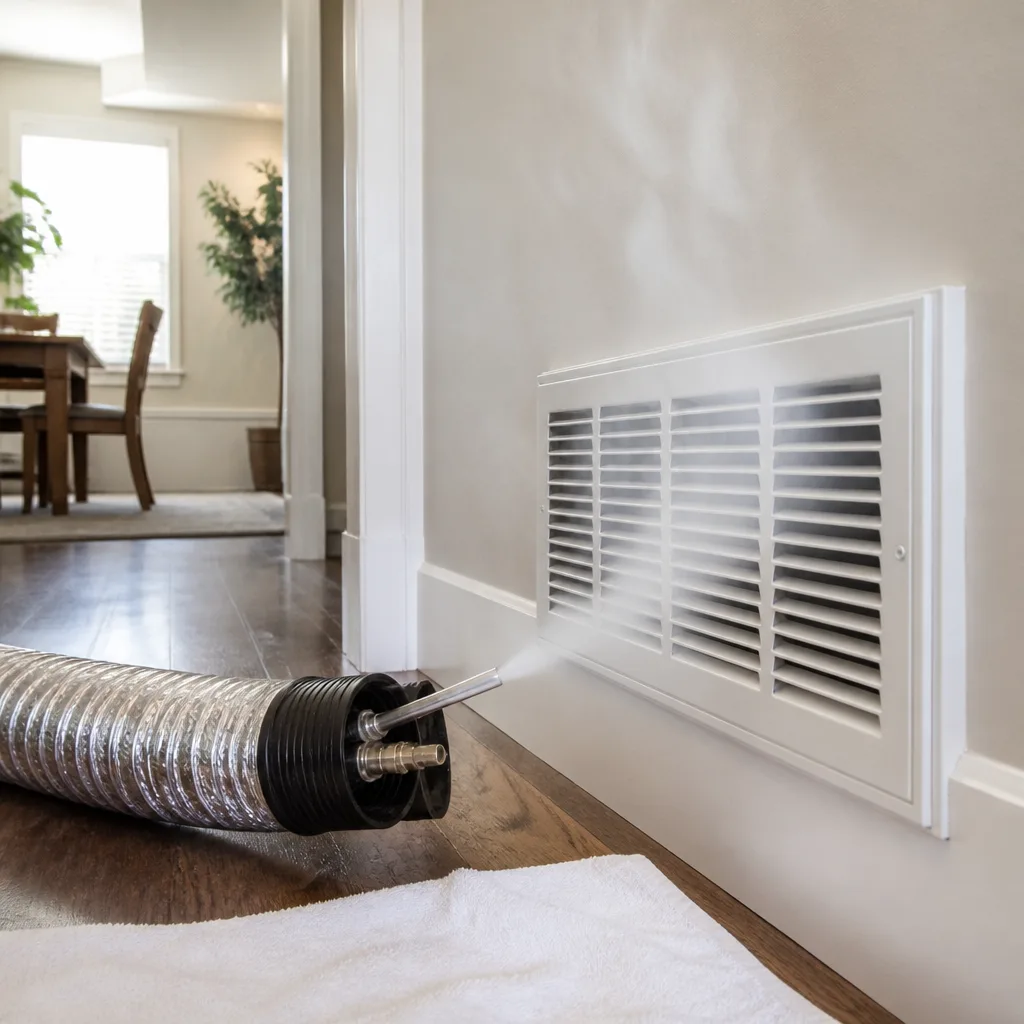 Sanitizing & deodorizing
Whole-system duct and dryer vent check with before-and-after photos - you see exactly what came out of your vents
That "$99 whole-house special" is a bait ad - the real number appears once they are in your hallway, or the "clean" is a shop-vac at the register. We photograph the inside of your ducts before and after instead.
Air Duct Cleaning Emergency Preparedness Guide for Sparks Homes
Most homeowners treat duct cleaning as a spring housekeeping item, something to schedule when the vents start looking dusty. In Sparks, that timing is backwards. The events that actually load your duct system with contamination arrive on their own schedule: a smoke plume from a wildfire moving down the valley, a spring windstorm pushing dust through every gap it can find, or a burst of rain that finds a weak flashing. By the time the filter looks bad, the material has already settled inside the trunks and branches. This guide covers how to prepare before those events hit, what to do during them, and how to tell the difference between a duct system that needs cleaning and one that’s genuinely compromised. We’ll walk through wildfire smoke, dust storms, and water intrusion as three separate problems with three separate response protocols.
Quick Answer
For a Sparks home, emergency duct preparedness means three things: shut down the HVAC system during heavy wildfire smoke unless you’ve upgraded to a filter that can handle fine particulate, seal return grilles during extended wind events, and treat any wet ductwork as a contamination situation with a 48 to 72 hour window before mold growth can take hold. After a major event, the only reliable way to know if cleaning is necessary is a camera-based inspection of the duct interior, not a visual look at the grille.
Styles & brands we work with
- Whole-home duct cleaning
- Dryer vent cleaning
- Camera inspection
- Sanitizing & deodorizing
Table of Contents
- Wildfire Smoke Response: Shut Down or Run the System?
- What to Inspect Before You Resume Normal Operation
- Post-Dust-Storm Assessment for Sparks Homes
- Water Intrusion: The 48 to 72 Hour Window
- Pre-Event Preparation Checklist
- Cosmetic vs. Necessary: How to Tell the Difference
- What a Real Contamination Inspection Looks Like
- When Cleaning Isn’t Enough: Duct Repair as a Follow-On
Wildfire Smoke Response: Shut Down or Run the System?
The default advice during a smoke event is to close the windows and leave the HVAC running. That’s often wrong, and the reason is technical rather than dramatic. During the 2021 wildfire smoke events, many homes in Sparks with MERV-8 filters and open return systems pulled fine particulate matter straight into their duct systems for days before anyone realized the filter wasn’t adequate for the job. A MERV-8 filter catches larger pollen and dust, but fine smoke particles pass through it and deposit on the interior walls of the duct runs, where they sit long after the sky clears.
So the first decision during a heavy smoke event is a filter question, not an equipment question. Here’s the framework we run through:
- Check your filter rating before you decide anything. If you’re running a standard MERV-8, running the fan during a heavy plume is actively pulling contamination in. If you’ve upgraded to a MERV-13 or higher and the filter is fresh with good airflow, the system can often run safely.
- If the filter is not upgraded, shut the system down. Close exterior windows and doors, tape off obvious gaps, and run portable air purifiers if you have them. Do not run the central fan to “circulate” air during this window.
- If you’re in a newer Sparks home with a tight envelope and a MERV-13+ filter, run the fan on low. Continuous low-speed circulation through a high-efficiency filter is the best-case scenario. You’ll need to swap that filter sooner than usual.
- When the smoke event ends, don’t just swap the filter and resume. Run a full duct inspection, because the contamination you’re worried about is downstream of the filter, not in it.
One thing worth saying plainly: the filter is not the final barrier. It’s the first one. Fine smoke particulate that gets past it does not leave on its own. We’ve pulled measurable accumulation out of return trunks in Sparks homes weeks after a smoke event had passed, because the homeowner assumed that once the air quality index dropped, the duct system reset. It doesn’t.
What to Inspect Before You Resume Normal Operation
After any significant smoke event, before you switch the system back to normal operation, run this inspection sequence. It takes about fifteen minutes if you know what to look for, and it will tell you whether you’re dealing with a filter swap or a cleaning situation.
- Pull and inspect the filter. A filter that came out of a smoke event will be uniformly gray-brown rather than patchy. Photograph it against a plain background as documentation. Replace it before restarting the system.
- Look inside the return registers. Remove the grille on the largest return, the one nearest the air handler, and look at the interior of the boot and the first section of duct. If you see visible gray film or soot buildup on the walls, the contamination has entered the duct system.
- Check supply registers for streaks. Fine dark streaks radiating out from the supply grille indicate smoke-laden air has been pushed through the trunk and branches. A light dusty appearance is normal. A sticky, sooty film is not.
- Smell the system when it runs. A persistent smoky smell that lingers hours after the outdoor air has cleared is a signal that smoke has bonded to duct surfaces.
- Note any HVAC components that may need their own cleaning. The blower wheel and evaporator coil in a Sparks system can pick up smoke film. If there’s visible loading on either, the system needs more than a filter swap.
Resume normal operation only after you’ve replaced the filter and confirmed no visible soot in the return. If items 2 through 4 came up positive, you’re looking at an air duct cleaning job, not a filter change. The equipment that matters here is a rotary brush system like the Rotobrush and a HEPA-rated vacuum like the Nikro units we work with, because the contamination binds to duct walls and won’t lift with suction alone.
Post-Dust-Storm Assessment for Sparks Homes
Sparks gets hit with high-wind dust events in spring more reliably than most homeowners expect. A single windstorm can push a significant load of fine dust and grit into a home’s return system, and the accumulation pattern is different from smoke. Smoke particles are fine and bind to surfaces. Dust is coarser and settles into horizontal runs and low points first, then works its way toward the return grilles over the following days as the system runs.
The telltale sign is at the return grille. If the grille face shows a fresh dust film within a day or two of a wind event, the dust has already begun migrating into the duct system. The grille is a good indicator, but the real accumulation happens roughly behind it, in the first few feet of the return run. What you’ll typically find is:
- Sand and grit at the bottom of horizontal return runs, heaviest on the side of the house facing the prevailing wind
- Fine dust film coating the blower wheel, which reduces efficiency and can throw the wheel off balance
- Dust packed into the teeth and fins of return grilles, a sign the grille is acting as an unintended first-stage filter
- Silt landing on the fins of the A-coil, which restricts airflow and drives up the temperature rise across the system
The response protocol after a dust event is different from the smoke protocol because you’re not trying to keep out fine particulate. You’re dealing with deposited material that has to be physically removed. Your filter will look loaded, and that’s the easy part. The trickier question is whether the dust stopped at the filter or made it around it. In homes with loose return ductwork, the answer is usually around it. A camera inspection is the only way to know. That’s why we use a Rotary Brush camera and HEPA vacuum on every walkthrough, because a visual estimate from the grille will miss what’s happening twenty feet up the trunk.
Water Intrusion: The 48 to 72 Hour Window
Water is the highest-stakes duct emergency, because it’s the only one that can produce a health hazard on a short timeline. Wet ductwork, whether from a roof leak over a chase, a flashing failure, or a flash flood that entered a lower level, begins supporting mold growth within roughly 48 to 72 hours. After that window, the material inside the duct is no longer simply “dirty.” It’s biologically active, and cleaning it back to safe condition is a very different job than standard duct cleaning.
The decision tree for wetted ductwork:
- Stop the system immediately. Don’t run the fan. Running it distributes spores from the wet section into the dry sections of the system and into living space.
- Identify the wet section. The wet zone is usually localized: a chase that took water from a roof leak, a section of flex duct that was soaked, or a lower-level trunk that took water from a flood. Find the boundary.
- Within 24 hours, assess. If the material is porous, like flex or duct board, and has been thoroughly soaked, it likely needs replacement. If it’s metal duct that got splashed and dried quickly, it may be salvageable with cleaning and disinfection.
- Past 48 hours, treat it as contamination. Visible mold growth, a musty odor, or any sign of microbial activity means the section should be handled by professionals, not by a homeowner with a vacuum. Photograph and document the wet zone for insurance purposes before any work is done.
- Before re-running the system, get a professional clearance. That’s a judgment call, but on wetted ductwork, the cost of a professional inspection is small compared to the cost of spores circulating through the home.
If water entered a wall cavity near a duct run, that’s a separate concern. Wetted insulation around a duct is a much bigger problem than a wetted metal duct, and it falls into the category of true remediation, not standard cleaning. The Abatement Technologies filtration equipment we use is the same standard used in professional remediation work, and it’s the right tool for containing debris and interior contamination during cleanup of a serious event.
Pre-Event Preparation Checklist
The most effective emergency preparation is done before the event. Once smoke is in the valley or the wind is blowing, your options narrow significantly. Here’s what we tell Sparks homeowners to put in place ahead of the spring dust season and the late-summer smoke season.
- Upgrade your filter to MERV-13 or better, and keep two spares. A MERV-13 handles fine particulate well enough to make running the system viable during a moderate smoke event. Check with your HVAC contractor that the filter’s pressure drop is within spec for your blower, because over-filtration can strain the system.
- Pick up a set of return grille covers. Plain cardboard and painter’s tape works. The goal is a fast way to seal the largest returns during an extended HVAC shutdown when outdoor particulate is heavy.
- Photograph your ducts before any event. Take clear pictures of the interiors of every return boot you can access, the filter face, and the blower compartment. If a qualifying event happens and you file an insurance claim, those “before” photos are the difference between a routine claim and a fight. Insurance adjusters want to see pre-existing condition.
- Note your system age and filter spec. Write them on a piece of tape on the air handler. It sounds trivial, but on the day of an event you don’t want to be guessing whether your filter is MERV-8 or MERV-13.
- Confirm your dryer vent path. If you haven’t looked at the dryer vent in years, do it now, before smoke season forces you to prioritize. A blocked dryer vent is an unrelated emergency waiting to happen. dryer vent cleaning is a separate job from duct cleaning and worth scheduling on its own.
- Locate the main HVAC shutoff. Know how to kill the system quickly. During a windstorm with dust blowing in through open windows, you may want to shut the system down within seconds.
None of this takes a weekend to set up. The camera documentation step is the one most homeowners skip and regret. Two hours of photographs are worth more than any receipt when an insurance claim comes down to “was the duct system already contaminated before the fire?”
Cosmetic vs. Necessary: How to Tell the Difference
The question after any event is whether the duct system actually needs cleaning, or whether the dust you’re seeing is a cosmetic issue that a grille wipe-down will handle. Most quotes you receive will take a visual-only look and tell you the answer is “yes, clean it,” because that’s the service they sell. The honest answer is more nuanced.
Here’s the distinction we use:
- Cosmetic dust sits on the grille face and the first inch of the boot. Wiping the grille and swapping the filter returns the system to normal. Cleaning is not necessary.
- Necessary cleaning involves material that has bonded to the duct walls, accumulated in volume at runs and low points, or built up on the blower wheel and coil. This material will not come off with normal airflow and will continue to shed into the living space until removed.
- Remediation territory is when microbial growth, water damage, or visible soot film from a fire event is present. Cleaning is necessary, but done under contaminated-conditions protocols, not standard cleaning.
The way to make the call is to actually look. A visual-only estimate done from the register is like a mechanic diagnosing an engine by looking at the hood. A camera-based inspection is the equivalent of opening the hood. We use a Rotary Brush camera on every inspection so the homeowner sees exactly what’s in the duct before deciding. Air quality you can verify starts with seeing the actual contamination, not hearing about it.
One more point. The right moment to schedule a cleaning is not always right after an event. Many Sparks homes are better served by cleaning once at the end of the dust season and once at the end of the smoke season, rather than reacting to each individual event. The annual pattern here is roughly two periods when your duct system takes on a load. Cleaning after each is overkill for most homes. Cleaning after both is reasonable.
What a Real Contamination Inspection Looks Like
If you’ve requested a duct cleaning estimate and the technician walks in, looks at the return grille, and hands you a price without ever opening anything, you’re getting a visual-only quote. That quote isn’t necessarily wrong, but it can’t reliably tell you what’s happening downstream.
A real inspection at a Sparks home should look like this:
- Filter removal and inspection. The filter comes out. It’s photographed. You get told what rating it is and whether it was doing its job.
- Return grille removal. The largest return is opened. The interior of the boot and first section is examined with a flashlight. If the technician doesn’t pull the grille, ask them to.
- Camera inspection of the main trunk. A rotating camera goes into the main trunk line to check for accumulation, obstructions, and any breaks or separations in the duct seam. This is also where duct repair needs show up: a loose joint in the trunk that’s been letting dust in for years.
- Blower wheel and coil inspection. Both get looked at. A loaded blower wheel is a strong signal the duct system has been carrying more contamination than the filter is catching.
- Dryer vent check, if applicable. If it’s been more than a year, the dryer vent gets a quick look while the technician is already onsite.
The whole walkthrough takes twenty to thirty minutes for a typical Sparks home. When we do an inspection, we work with Honeywell and Aprilaire indoor air quality components when they’re relevant to the fix, and we use a Rotobrush rotary brush and Nikro HEPA vacuum for the cleaning itself, because the equipment quality is what determines whether the camera image before and the camera image after actually match.
When Cleaning Isn’t Enough: Duct Repair as a Follow-On
One thing we consistently find during post-event inspections in Sparks is that the underlying reason a system took on contamination is a duct problem: a separated seam, a crushed section of flex, a poorly sealed boot, or a disconnected run. If you clean a system with a broken duct and don’t repair the break, the next windstorm refills it. That’s why Air Duct Repair is a standalone service in our lineup, and why we can often do it on the same visit as the cleaning.
Repairs worth flagging after an emergency event include:
- Return boots that were never sealed to the subfloor, which let attic or crawlspace air pull in along with the intended return air
- Loose joints in the main trunk that open up under high wind pressure
- Crushed sections of flex duct in framed chases, which narrow the airflow path and accelerate dust deposition
- Disconnected supply runs that dump conditioned air into a wall cavity instead of into the room
None of these require the whole system to be rebuilt. Small repairs done during the same visit as a cleaning turn a recurring contamination problem into a one-time fix. If you’ve been through two smoke events or two dust storms and the ducts are loaded again each time, the repair question is more important than the cleaning question. That’s what separates Duct Cleaning Sparks from a cleaning crew that leaves the repair to someone else. We find problems and fix them in the same visit, and the work is done to Guardsman-grade cleaning protection standards so the finished result is documented and defensible.
If you’re managing a rental property in Sparks, this matters for inspection and turn-over. A documented repair-and-clean after a qualifying event is a very different thing from a “cleaned the ducts” line on an invoice. Photographs of the interior before and after are the proof a property manager actually wants.
Common Mistakes to Avoid
- Running the system during heavy smoke with a MERV-8 filter. This is the single most common mistake we see after a smoke event. The filter can’t handle the particulate, and the system distributes it through the entire duct run in a matter of hours.
- Assuming the filter is the last line of defense. In most Sparks homes, the filter is doing part of the job and the rest ends up on the duct walls. A filter swap alone doesn’t clean the system.
- Running the fan on a wet duct system to “dry it out.” This spreads spores from the wet section throughout the dry sections. Stop the system, find the wet zone, and get it inspected before you turn the fan back on.
- Skipping before-photos when filing an insurance claim. An adjuster’s first question is whether the pre-existing condition explains the damage. Photos of duct interiors taken before any event are the only reliable answer.
- Hiring a cleaning crew that won’t open a register. A quote given without looking inside the duct isn’t a quote; it’s a guess. Ask for camera documentation.
- Paying for cleaning on a system with a broken duct. If the underlying duct is disconnected or a trunk seam is loose, the cleaning will be undone by the next windstorm. Fix the break the same visit.
- Overlooking the dryer vent during a duct-focused cleanup. If you’re going to have someone under the house or in the attic anyway, the dryer vent is worth a look. It’s a fire-safety item, not a cosmetic one.
See the difference
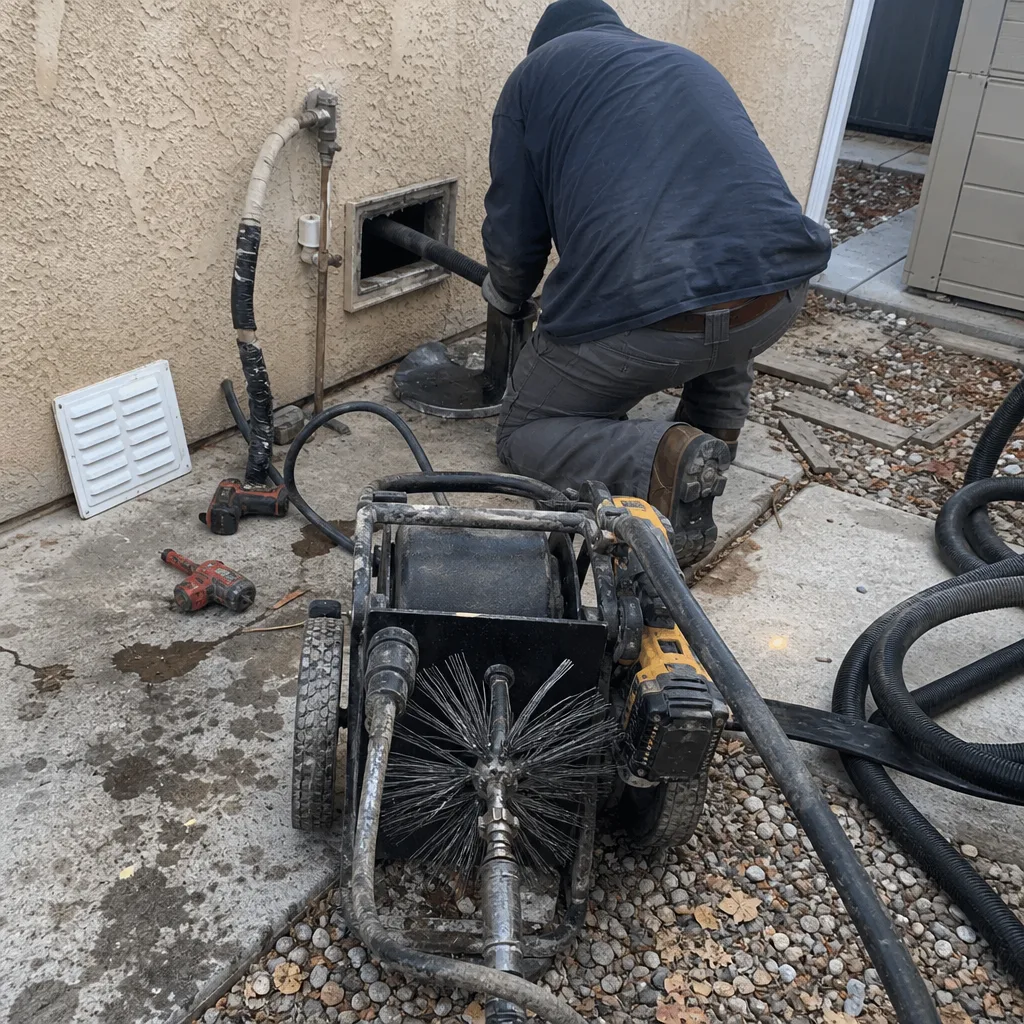 Before
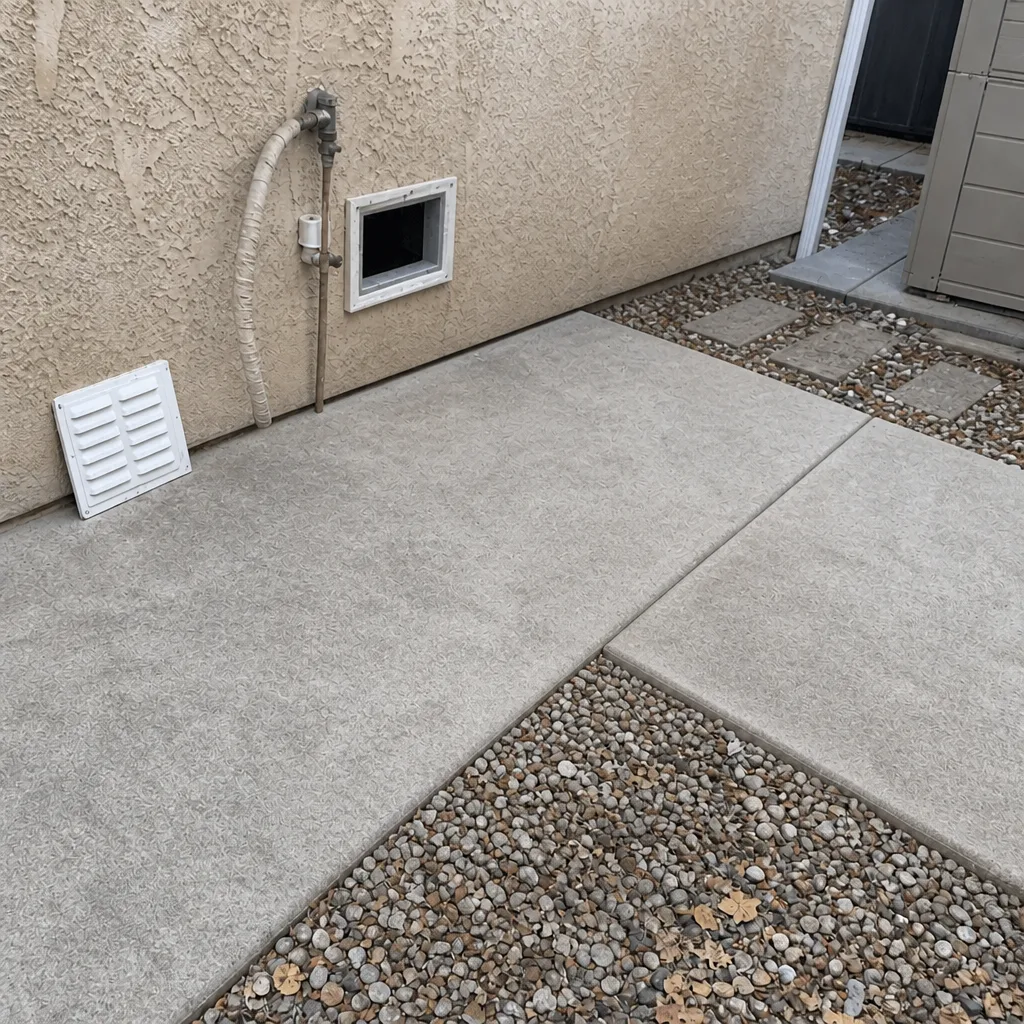 After
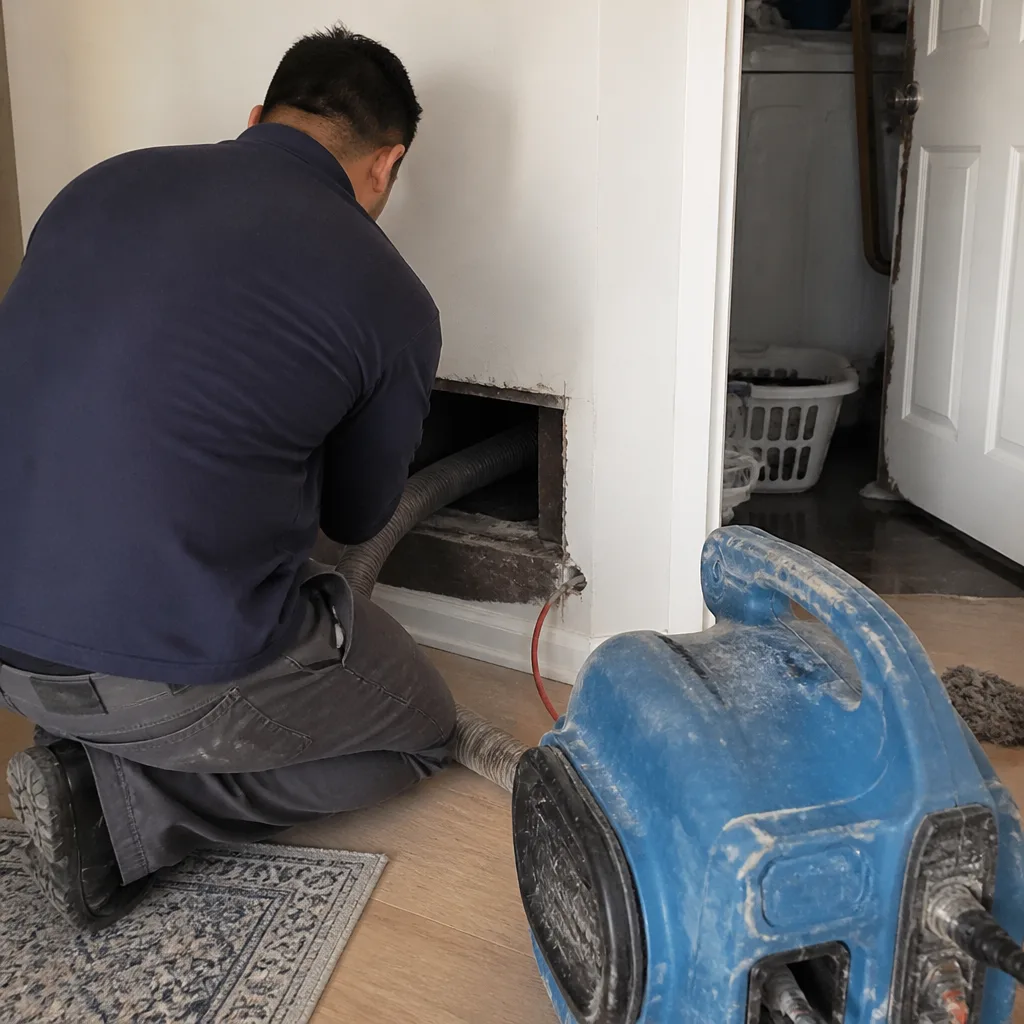 Before
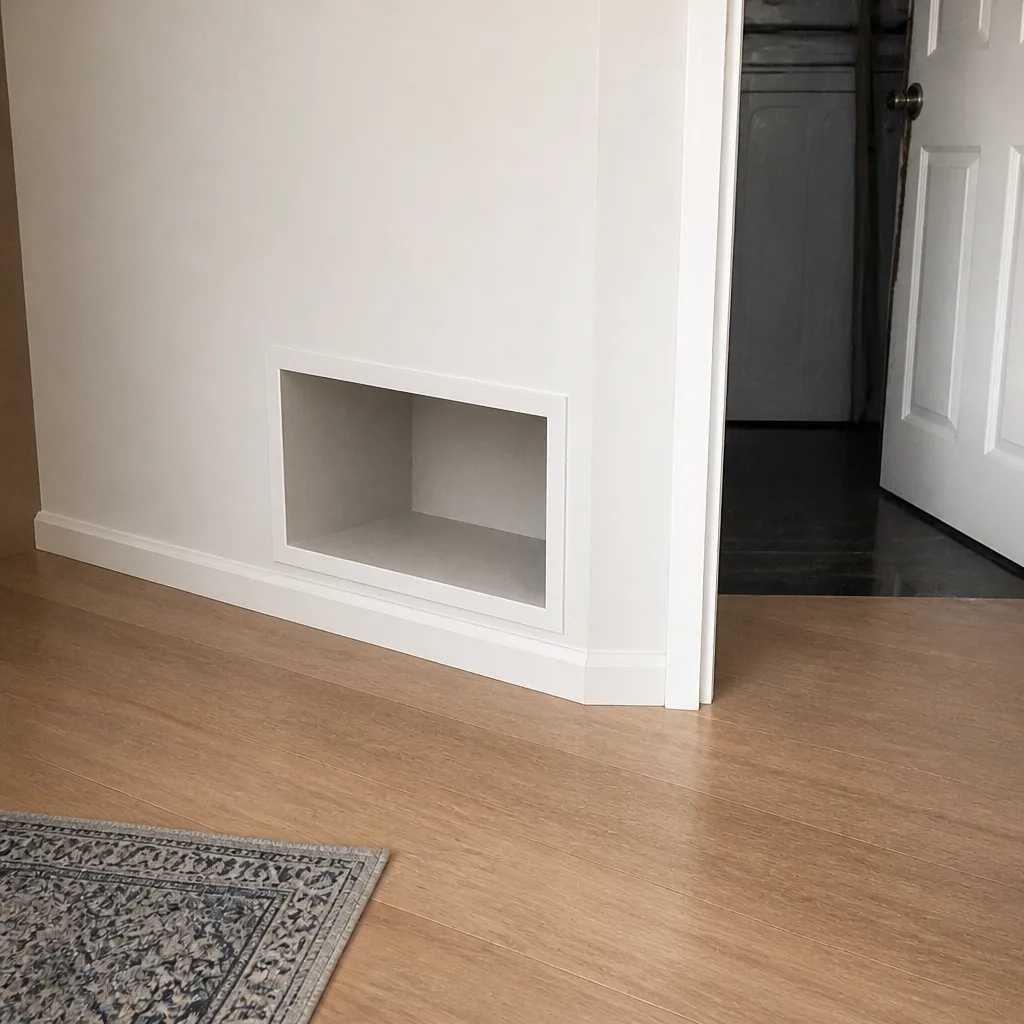 After
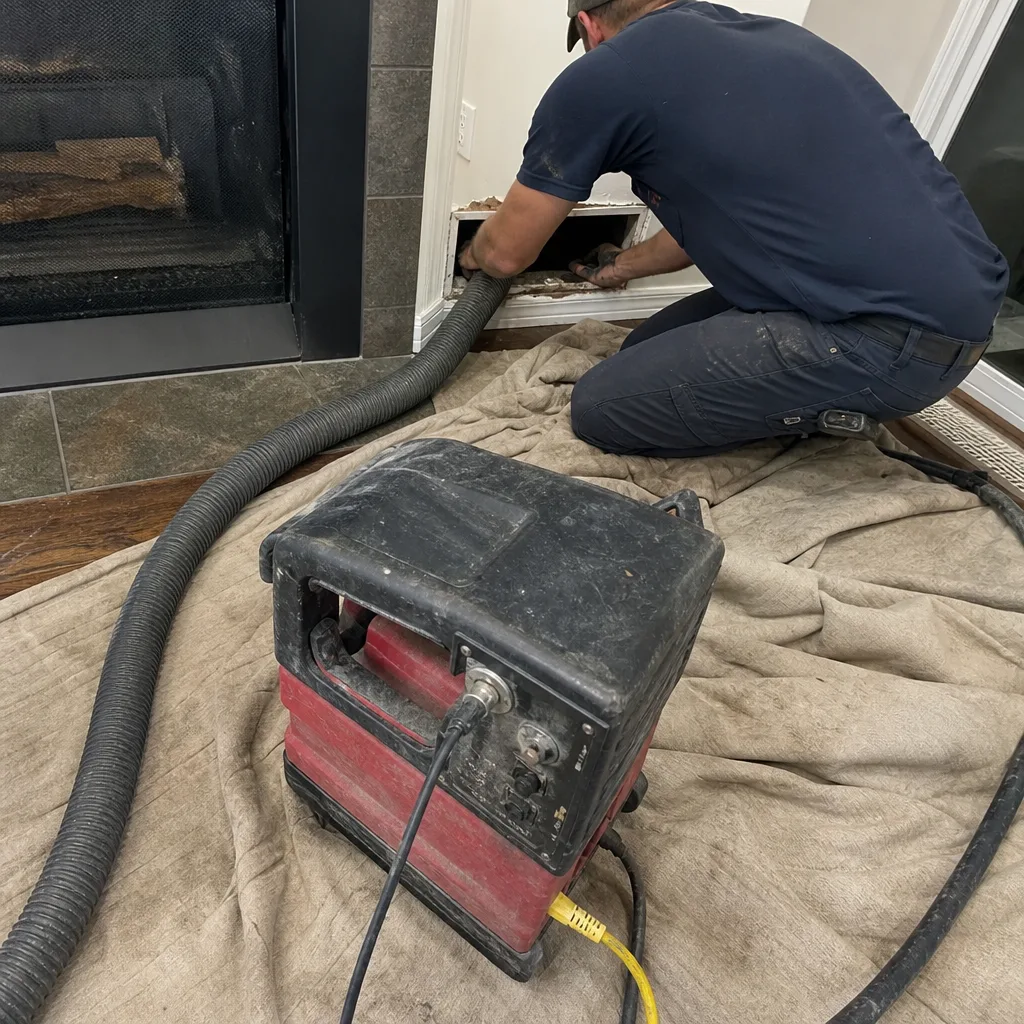 Before
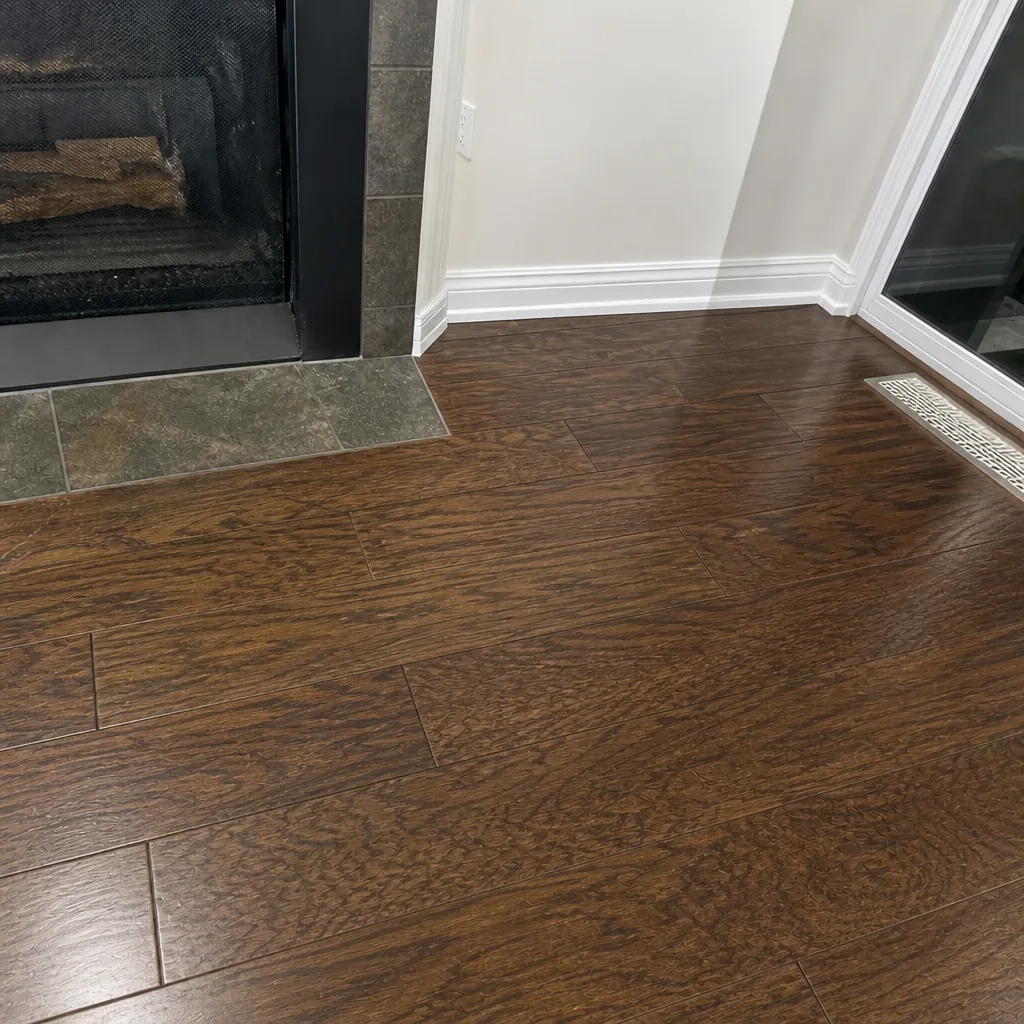 After
When to Call a Professional
Call for professional help if any of the following is true: you’ve had visible smoke film inside your return boots, water has entered a duct run or wall cavity near a duct, the blower wheel or A-coil shows visible loading, the system smells musty or smoky after an event has cleared, or you’re facing an insurance claim and need documented condition evidence with before-and-after photos. Our technicians have up to experience working through exactly these calls, and we bring professional-grade Rotobrush, Nikro, and Abatement Technologies equipment to every job.
Duct Cleaning Sparks offers free estimates in Sparks, and the price is set per job by a written estimate after the inspection, not by per-vent guesswork. Call (888) 561-9258. We answer 24/7. Fast dispatch from 7am to 7pm, Sunday through Friday.
Frequently Asked Questions
No. Cleaning is necessary only when the smoke has actually deposited inside the duct system. If you ran a MERV-13 or better filter during the event and there’s no visible soot film in the return boot, a filter change and a camera check are usually enough. If you ran a MERV-8 or the system was shut down but the smoke still migrated in through windows, plan on a professional inspection to make the call. Call (888) 561-9258 for a free estimate.
Roughly 48 to 72 hours. Once ductwork has been thoroughly wetted, mold growth can begin in that window, and after it’s established, cleaning alone may not restore the section to a safe condition. Shut the system down immediately, document the wet zone, and get a professional inspection before running the fan again. Call (888) 561-9258 if you’re facing this now.
We price per system from a written estimate after the inspection, not per vent, and not from a coupon. The reason we don’t quote a teaser price is that a system that’s been through a smoke event or a water intrusion is not the same job as a routine clean, and the honest range depends on what the camera shows. Call (888) 561-9258 for a free estimate, and the written number is what you’ll pay.
Because they’re quoting a different job. A very low quote is typically for a shop-vac pass at the visible register, not a camera-inspected clean with HEPA-rated extraction and rotary brush agitation. The low number isn’t wrong about its own scope. It’s wrong about whether that scope solves your contamination problem. Ask each bidder what equipment they bring and whether they’ll show you interior photos before and after.
Before-and-after photos of your own ducts. That’s the standard. A camera image of the interior of the return boot and the main trunk, taken before work starts and after work finishes, is the only reliable evidence. If a crew can’t produce that, the invoice isn’t documentation.
For most homes here, once every two to three years is a reasonable baseline, with an inspection after any major smoke or dust event. Homes with pets, allergy-sensitive occupants, or a history of duct problems tend to need it more often. Homes with well-sealed ducts and MERV-13 filtration tend to stretch longer. The answer should be tied to what the camera shows, not to a fixed calendar.
The Bottom Line
Sparks throws three distinct contamination scenarios at a duct system: wildfire smoke, spring dust storms, and water intrusion. Each has a different response protocol, and confusing them is where most homeowners get into trouble. Shut the system down for heavy smoke unless you have upgraded filtration. Expect dust accumulation at return grilles within a day or two of a wind event. Treat any wet ductwork as a 48 to 72 hour clock with a professional inspection before the fan comes back on. Document your ducts before the event, not after. And when it’s time to clean, insist on camera documentation and repair capability in the same visit, not a visual-only estimate and a truck-mounted vacuum. Duct Cleaning Sparks brings professional-grade Rotobrush, Nikro, Abatement Technologies, and Honeywell/Aprilaire familiarity to every job, and the price is set per job by written estimate. Call (888) 561-9258 for a free estimate. We answer 24/7. Fast dispatch from 7am to 7pm, Sunday through Friday.
Written by the team at Duct Cleaning Sparks.